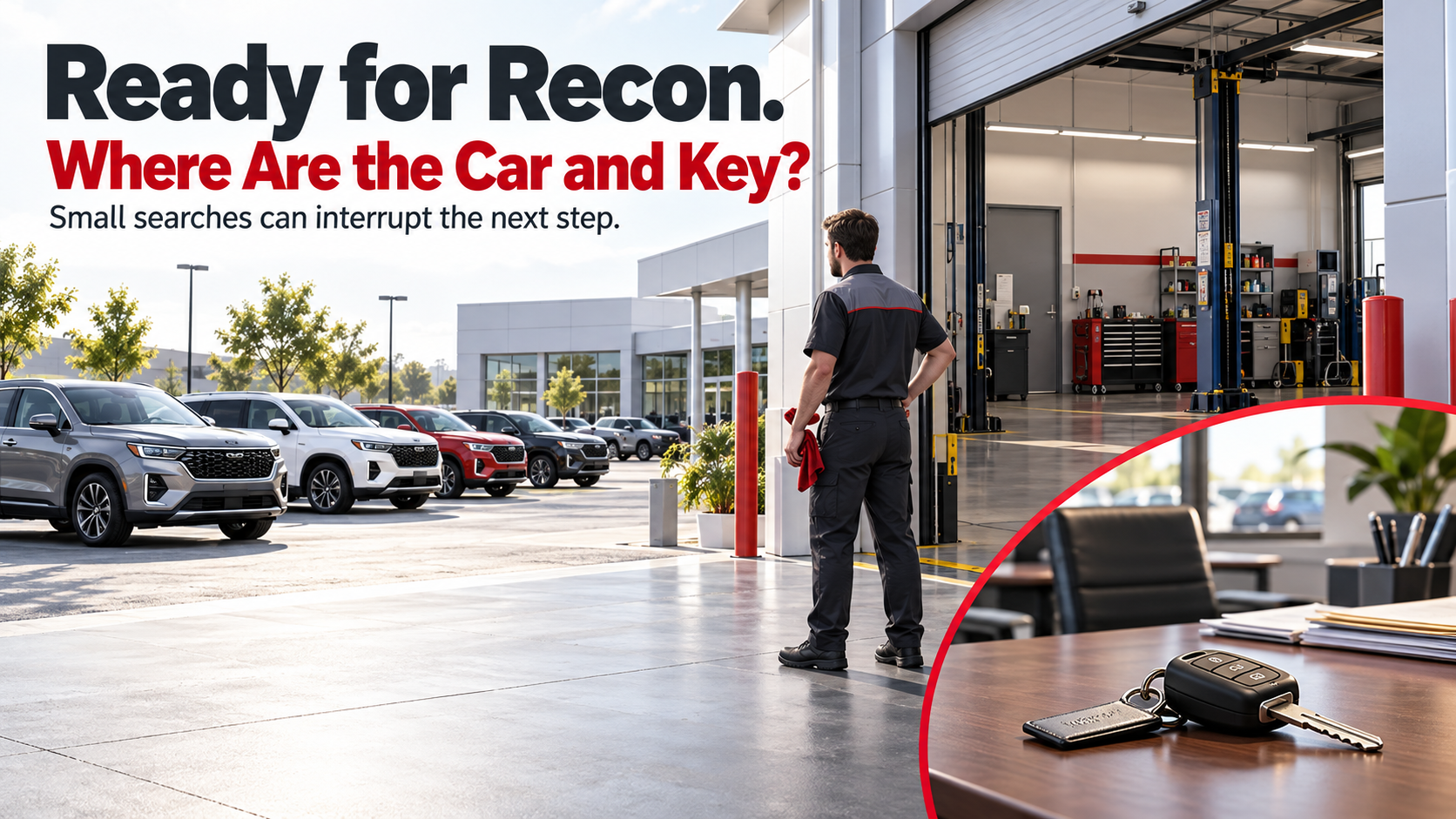
A vehicle is ready for its next recon step. The technician has an opening. The work is approved. But nobody knows where the car is parked—or where its key went.
Now the next step starts with a search.
Dealerships can reduce these delays by tracking vehicle and key locations, establishing clear handoff procedures, and making location information available to the people moving work forward. Combined with a recon workflow system, that approach helps teams connect what needs to happen next with where the vehicle and key can be found.
Where vehicle and key searches interrupt recon
Reconditioning involves more than completing repairs. Vehicles move between inspection, mechanical work, outside vendors, detail, photography, and ready-for-sale parking. Each move creates another handoff.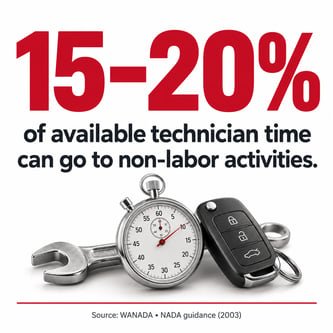
Consider a common situation: a vehicle finishes its inspection and moves to a holding area. The recon status is updated, but its parking location is not. When a technician becomes available, someone has to walk the lot, ask around, or check several parking areas before bringing it into the shop.
The key can create a separate delay. It may be at the service desk, in a cabinet, with a porter, or left inside another vehicle. Finding the car does not necessarily mean the team can move it.
These interruptions are easy to overlook because they happen between recorded work steps. To understand their impact, examine the handoffs as closely as the repair stages.
1. Make vehicle locations visible throughout the recon process
Start by identifying every place a recon vehicle might go. Include receiving areas, service parking, holding areas, detail, photography, overflow lots, and parking structures where applicable.
For each area, ask:
- Can the next employee find a vehicle without contacting the person who moved it?
- Does the location information remain useful when the vehicle moves again?
- Who can access that information during the working day?
A shared parking log can provide a starting point, but it depends on employees updating it after every move. A location-tracking system can provide another approach, using tagged vehicles and a network designed for the dealership's coverage needs.
TrueSpot helps dealership teams locate tagged vehicles within covered areas. When planning coverage, include the places vehicles actually wait between recon steps—not just the sales lot.
2. Track the key as well as the vehicle
A vehicle's location answers only part of the question. The team also needs access to its key.
Build a consistent process for identifying and handling recon keys. Make sure employees know where keys should be returned and how to locate them when they are away from that designated location.
Key accountability and key location serve related purposes. A checkout record can identify who last took a key. Location tracking helps staff find a tagged key within the covered campus as it moves through the dealership.
TrueSpot can track tagged keys and vehicles, helping teams search for both parts of the handoff. This is particularly useful when sales, service, and recon share vehicles or move keys between departments.
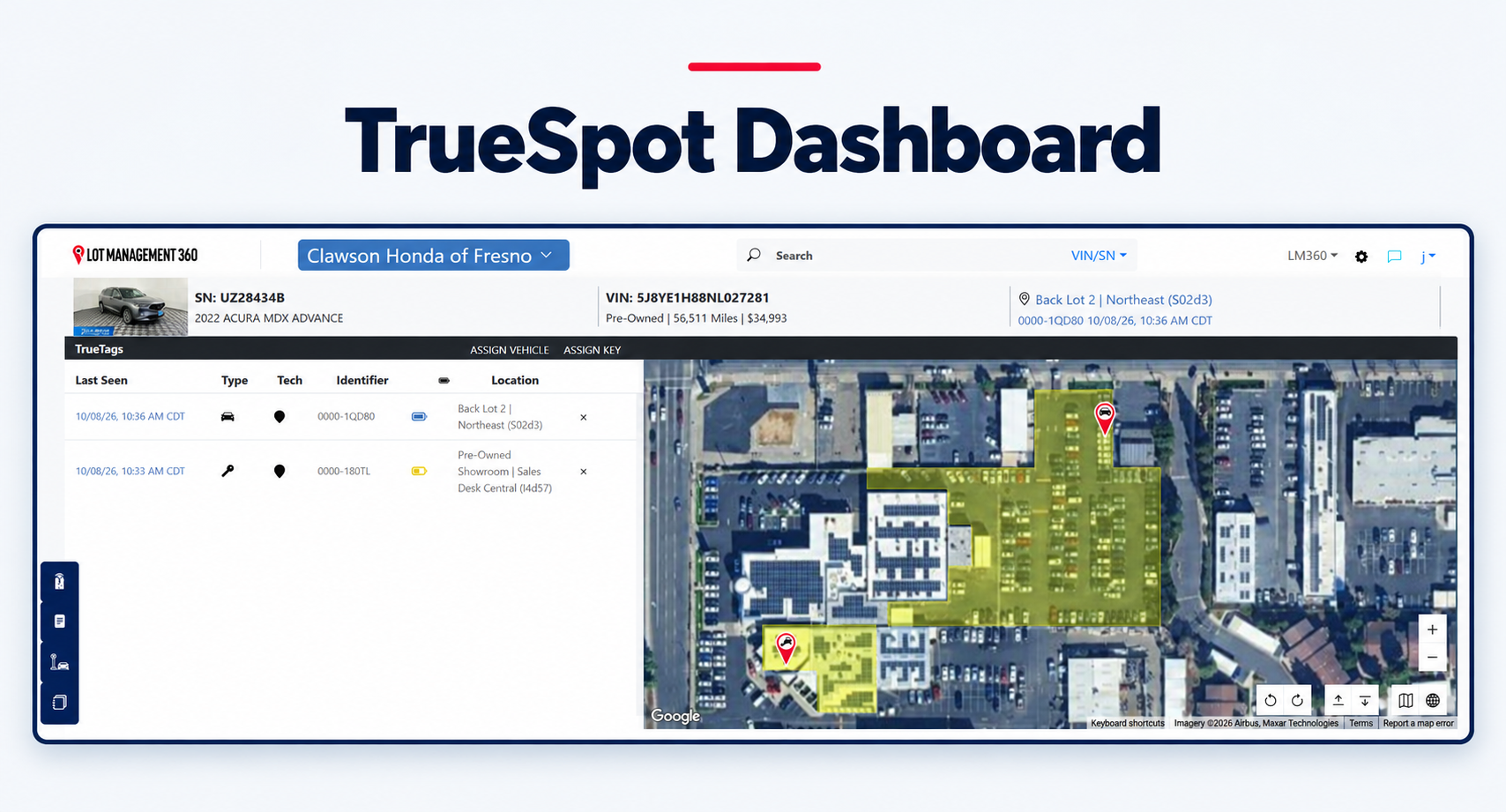
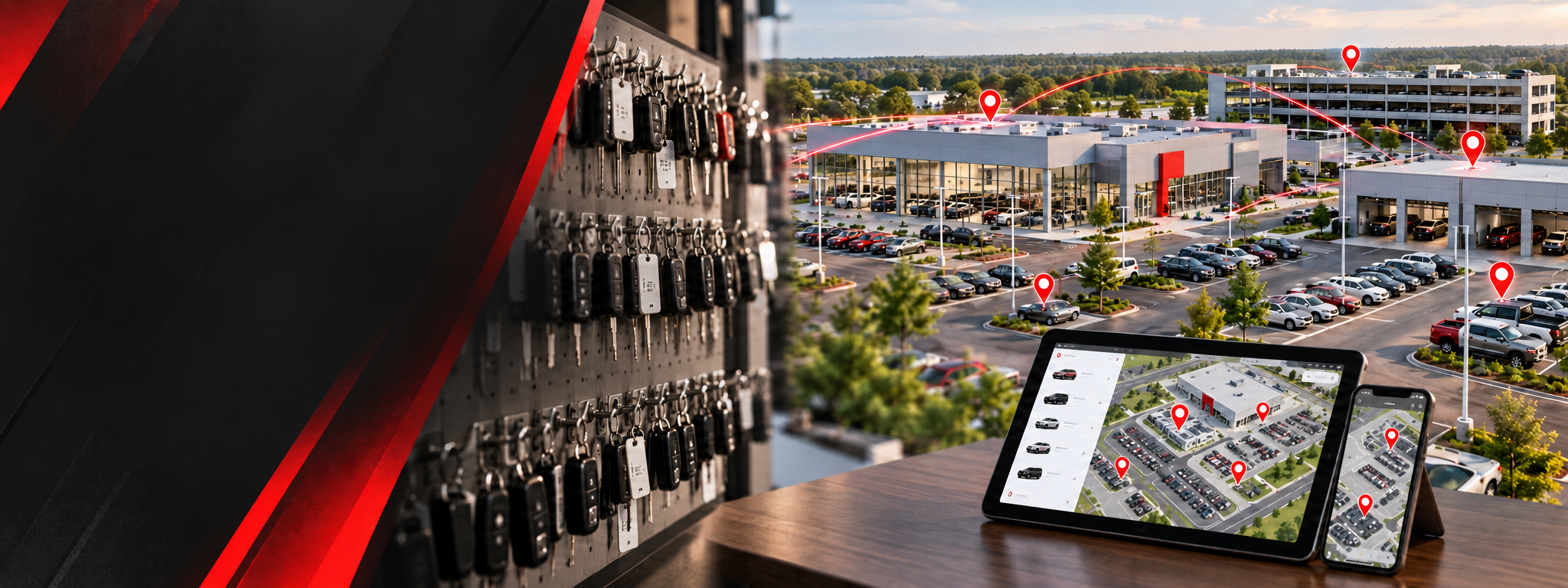
A vehicle is ready for detail, but the car and key are in different places. TrueSpot shows the tagged vehicle in the back lot and its key at the sales desk. The porter can check both locations before heading out, collect the key, and bring the vehicle to detail—helping the next step begin with fewer searches and interruptions.
3. Connect recon status with physical location
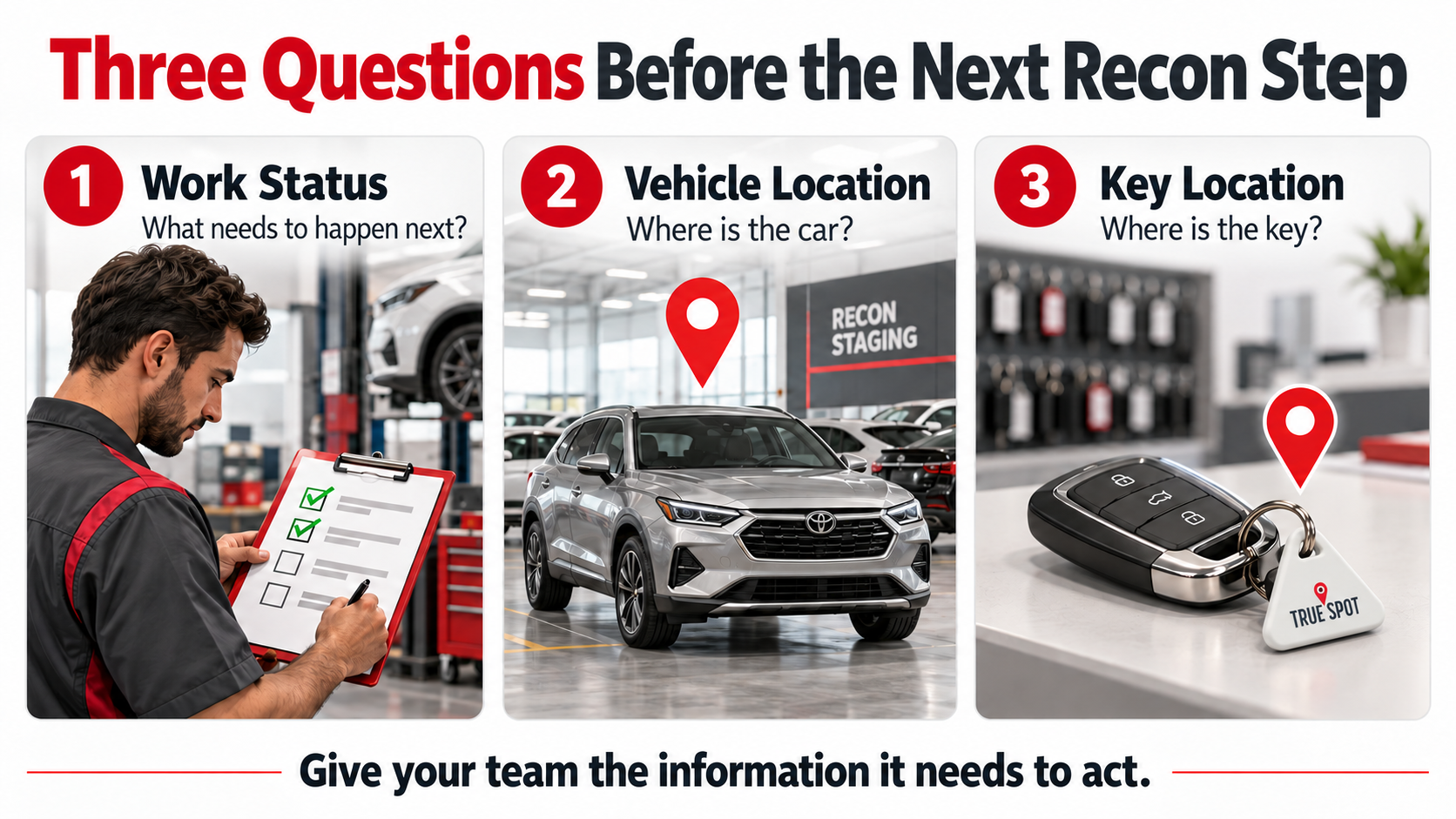
Recon status and vehicle location answer different operational questions:
| Information | Question it answers |
|---|---|
| Recon status | What work is complete, and what needs to happen next? |
| Vehicle location | Where can the team find the vehicle? |
| Key location | Where can the team find the key needed to move it? |
A vehicle marked “waiting for parts” still needs a known parking location. A vehicle marked “ready for detail” still needs to be found and moved.
Use your recon workflow tool to manage stages, approvals, assignments, and repair information. Use location information to help staff act on that workflow. Give employees access to both recon status and vehicle and key locations so they can see what needs to happen next and find what they need to do it.
4. Keep recon moving when handoffs don’t go as planned
Clear handoffs help recon run smoothly. Ideally, employees update the work status, move the vehicle to its next staging area, return the key, and identify who takes over next.
But a busy dealership doesn’t always follow the perfect process. A porter gets pulled into another task. A technician leaves a key at a different desk. A vehicle moves to make room, and nobody updates its parking location.
That’s when TrueSpot makes the biggest difference. Your team can locate the tagged vehicle and key within covered areas—even when they aren’t where the handoff procedure says they should be. Employees have a place to look without retracing every move or interrupting several coworkers.
The goal is a clear process backed by location visibility when the day gets busy.
See how TrueSpot helps your team find vehicles and keys when plans change.
5. Give vehicles waiting on parts or assignments a defined home
Vehicles that are not actively being worked on still need to be managed. Establish designated holding areas for vehicles waiting on parts, approval, technician assignment, or outside work.
Review those queues regularly. For each vehicle, confirm its status, the reason it is waiting, the person responsible for the next action, and where it is parked.
Location tracking helps staff find the vehicle. The workflow record explains why it is waiting. Using both makes it easier to act when a part arrives, approval comes through, or a technician becomes available.
6. Measure the delays between recon steps
If your dealership already measures total recon cycle time, add a closer look at the transitions between stages.
| Measure | What to look for |
|---|---|
| Time spent finding vehicles and keys | Repeated searches that interrupt planned work |
| Time between completed work and the next move | Vehicles ready to advance but still parked |
| Time in holding queues | Vehicles waiting without a clear next action |
| Total recon cycle time | Whether the overall process improves |
Start with a baseline from your own store. Record searches and delayed handoffs over a defined period, then compare the same measures after making changes. Account for differences in vehicle volume, repair complexity, staffing, and parts availability.
Location tracking addresses one part of recon. Measuring the whole process helps you see where it contributes and where other bottlenecks still need attention. Learn about reporting TrueSpot can provide.

Frequently asked questions
How are dealerships tracking vehicles in recon?
Dealerships can use parking logs, designated staging areas, and vehicle-location technology. A recon workflow system tracks the work stages, while a location system helps staff find the vehicle as it moves through covered areas of the dealership.
How can dealerships reduce recon cycle times?
Improve the steps that delay vehicles at your store: approvals, parts ordering, work assignment, department handoffs, and vehicle or key searches. Clear ownership and accessible location information help teams move vehicles when the next step is ready.
How can dealerships track vehicles waiting for parts or technician assignment?
Record the waiting status in the recon workflow, assign a responsible person, and place the vehicle in a defined holding area. Location tracking can help staff find it when work can resume, while the workflow record retains the reason it was waiting.
How can dealerships reduce recon delays caused by misplaced vehicles and keys?
Track both vehicle and key locations, establish consistent return and staging procedures, and give the relevant employees access to location information. Reviewing delayed handoffs helps identify where searches are repeatedly interrupting work.
How can I make my dealership recon process more efficient?
Map the full process from intake to ready for sale, then examine where vehicles wait and why. Prioritize recurring delays, clarify who owns each next action, and measure the results. Include the time spent locating vehicles and keys in that review.
Help your team find what it needs for the next step
When a vehicle is ready to move forward, your employees should have a clear way to find the car, access its key, and complete the handoff.
TrueSpot helps dealerships locate tagged vehicles and keys across covered areas of their campus. Pairing that visibility with clear recon procedures gives your team useful information at the moment it needs to act.
Schedule a TrueSpot demo to see how vehicle and key tracking can support your dealership's recon process.