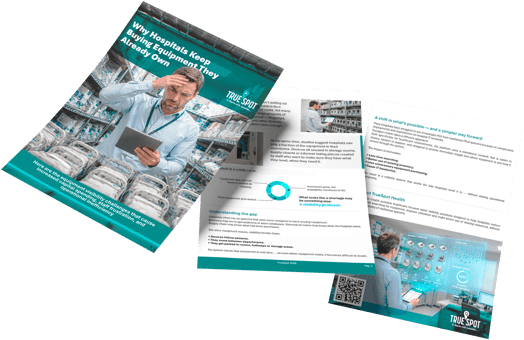
Most hospitals don’t think they have a visibility problem. They think they have an equipment shortage problem.
Staff members can’t find an IV pump. Wheelchairs seem unavailable. Monitors are harder to locate than they should be. So naturally, the assumption becomes: We need more equipment.
But that’s often the wrong diagnosis.
In many hospitals, the equipment already exists somewhere inside the building. The real issue is that once devices start moving through daily operations, visibility starts to fade.
None of this happens because people are doing something wrong. It happens because clinical teams adapt to the environment they work in, and over time, those adaptations create larger operational consequences.
Staff members spend more time searching. Biomedical teams struggle to track equipment for maintenance. Inventory records become less reliable.
Eventually, hospitals purchase additional devices because availability seems lower than it actually is — and the cycle keeps repeating itself.
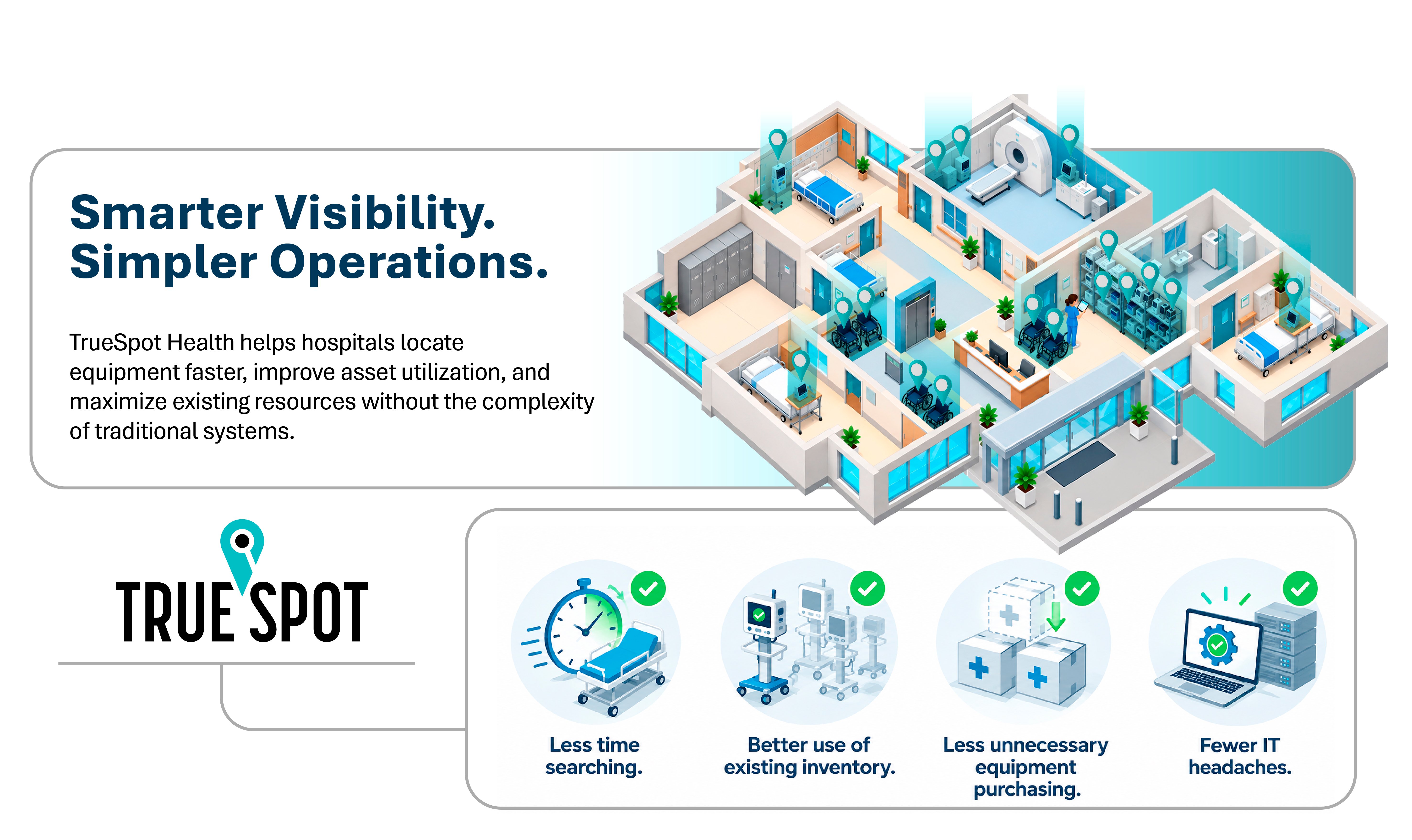
What makes this especially frustrating is that many healthcare organizations have tried to solve the problem before; traditional RTLS platforms often came with their own challenges: complicated deployments, IT dependence, and unclear ROI.
So even though the visibility problem remained, many hospitals stopped believing there was a practical way to solve it.
Today, that’s changing. Newer approaches are becoming simpler to deploy, easier to support, and more focused on the realities of how hospitals actually operate from day to day.
This isn’t just about hospital asset tracking equipment. It’s about helping nurses spend less time searching, helping biomedical teams maintain better oversight, and helping hospitals make better use of the resources they already have.
And in a time when healthcare organizations are being asked to do more with less, that kind of operational visibility matters more than ever.