Problem #1: Finding The Key
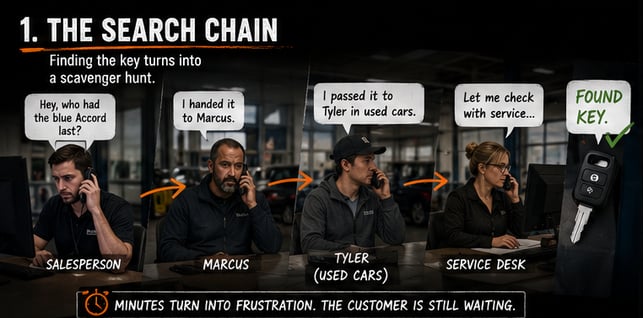
A customer walks into the showroom asking to see a specific vehicle.
The salesperson goes to grab the key.
If it’s a smaller store, maybe it’s missing from the keyboard or pegboard. If it’s a larger dealership, maybe it was checked out of the key machine hours ago and never made its way back.
So now the search starts.
“Hey, who had the blue Accord last?”
One salesperson says he handed it to Marcus.
Marcus says he passed it to Tyler in used cars.
Eventually the key gets found.
Problem #2: Finding The Car
Now comes the second problem:
finding the actual car.
So the salesperson starts walking the lot hitting the panic button trying to locate it.
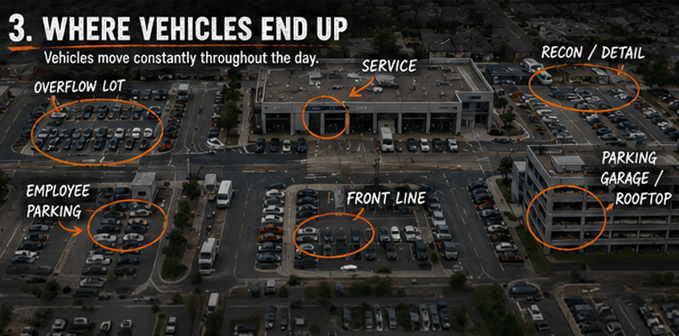
Maybe it got moved to overflow. Maybe it’s behind service. Maybe another salesperson parked it somewhere strange because they had an appointment later that day.
If the dealership has overflow lots, parking garages, multiple rooftops, or 20+ acres of inventory… this gets frustrating fast.
Especially because the salesperson is not trying to find a vehicle.
They are trying to find the exact vehicle the customer came in to see.
Problem #3: The Customer Is Still Waiting
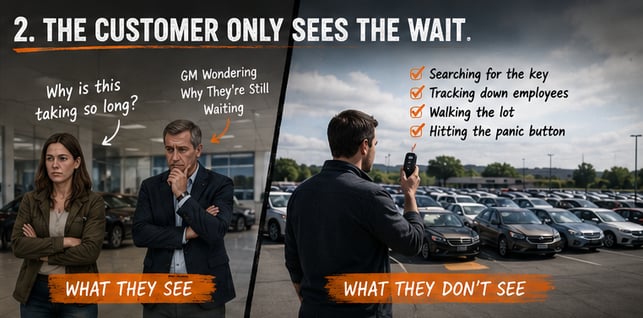
And while all this is happening…
the GM walks onto the showroom floor wondering why the customer is still standing there waiting.
What he cannot see is that the salesperson already spent the last 15–20 minutes:
- searching for the key
- tracking down employees
- and wandering the lot trying to find the vehicle
And if the car was moved?
Now the entire process starts over again.
Grab another key. Walk another section of the lot. Hit the alarm again. Hope somebody parked it where it was supposed to be.
And honestly…
this happens at dealerships every single day.

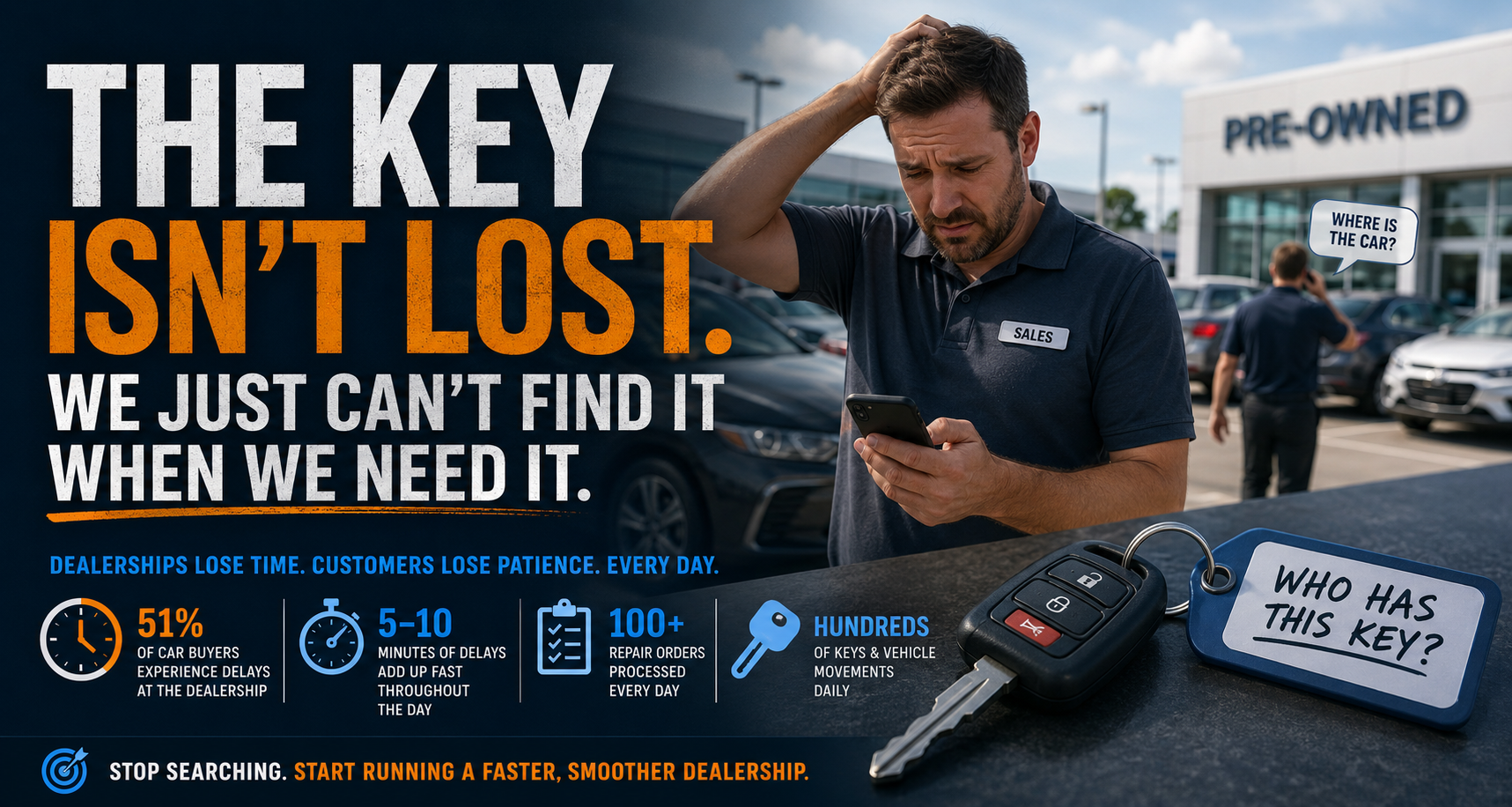
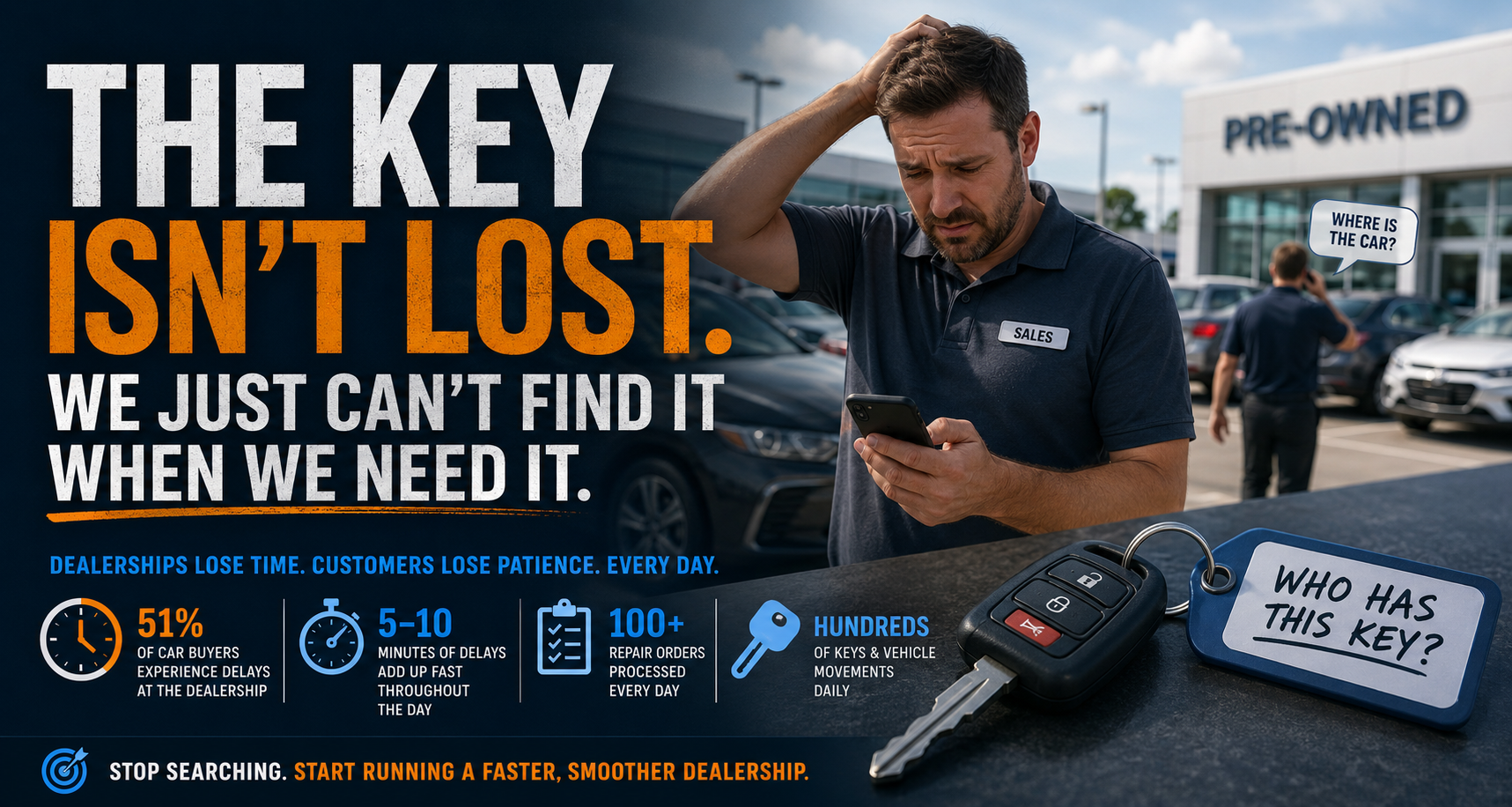
The Problem Usually Isn’t The Key
Most dealerships know the key is not permanently gone.
The problem is that nobody can find it when they actually need it.
And that creates issues everywhere: 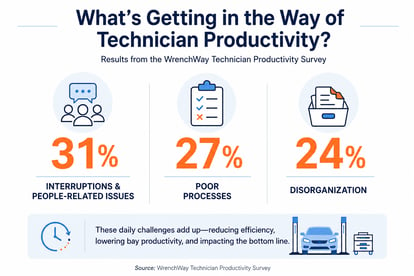
- sales
- service
- recon
- delivery
- customer experience
The larger the dealership gets, the worse this usually becomes.
More salespeople. More technicians. More porters. More inventory movement.
Eventually small delays start becoming major problems.
Dealerships Accidentally Create Their Own Chaos
Salespeople hide keys because they have appointments coming later. Recon moves vehicles for photos, detail, inspections, or service work. Porters move inventory around to make room.
Someone borrows a key “for just a minute.”
Then eventually nobody knows where anything actually ended up. Everybody is trying to move faster individually… but collectively it creates chaos.
Small Delays Become Big Problems
Most dealerships never realize how much time gets wasted searching for keys and vehicles until the store gets busy.
One delay by itself does not seem like a big deal.
But when that same delay happens: 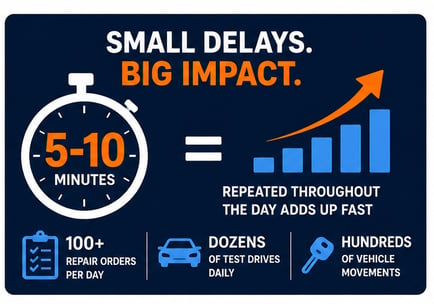
- dozens of times per day
- across multiple departments
- with multiple employees
…it adds up quickly.
A salesperson loses 15 minutes trying to locate a car.
A technician waits for keys before starting an RO.
Recon cannot move a vehicle because nobody knows where it got parked.
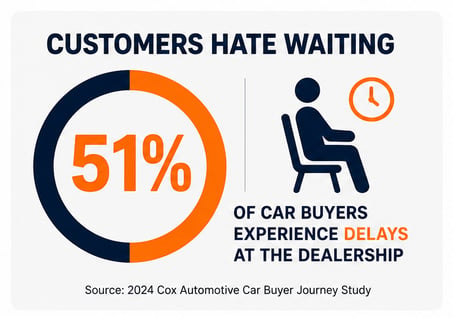
Customers wait longer.
Employees get frustrated.
And eventually the entire dealership starts slowing down.
Dealertrack estimates dealerships incur an average cost of $32 per vehicle per day while inventory remains on the lot due to operational inefficiencies and delays.
When delays involving keys, vehicle movement, overflow storage, and inventory visibility happen repeatedly throughout the day, the operational friction compounds quickly across sales, service, recon, and management teams.

The Best Dealerships Think About This Differently
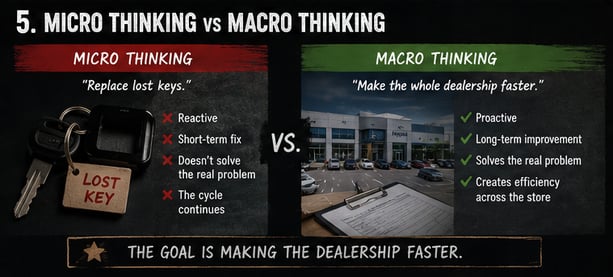
The best dealerships do not look at this as:
“How much are we spending replacing keys we couldn’t find?”
They look at it as:
“How much faster could we make the dealership if guys weren’t constantly searching for keys and cars?”
That is a completely different way of looking at the problem.
Some stores focus on replacing lost keys.
The best stores focus on helping employees stop wasting time searching altogether. Because if employees spend less time searching:
- sales guys can show more cars
- service can move more ROs
- recon can push inventory through faster
- customers wait less
- and the whole store runs smoother
The lost key problem starts fixing itself as a byproduct.
That’s the bigger picture.
The goal is not just finding keys. The goal is making the dealership faster.

Accountability Doesn’t Always Equal Visibility
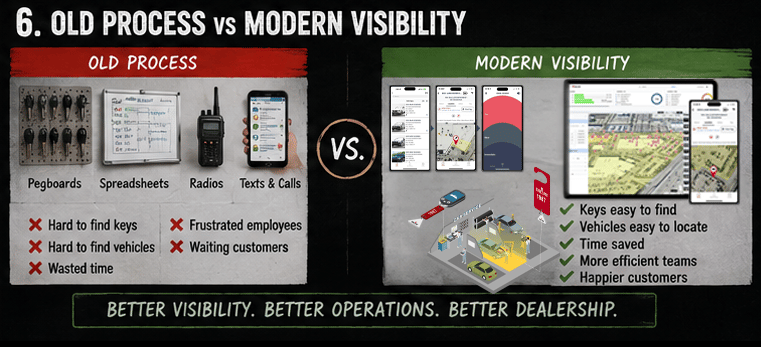
A lot of dealerships still use:
- pegboards
- spreadsheets
- or simply walking the lot hitting the panic button
Larger dealerships often invest in key management systems too, and for good reason. They create accountability and help reduce permanently lost keys. But those dealerships still run into...
Where is the key now?
And where is the vehicle?

Because once keys start changing hands between departments, finding things quickly gets much harder — especially at larger dealerships with overflow lots, parking garages, or multiple rooftops.
Customer Expectations Have Changed
Today’s customers expect faster, smoother dealership experiences.
They do not want to stand in a showroom for 20 minutes while somebody searches for a key and wanders the lot looking for the vehicle.
And honestly…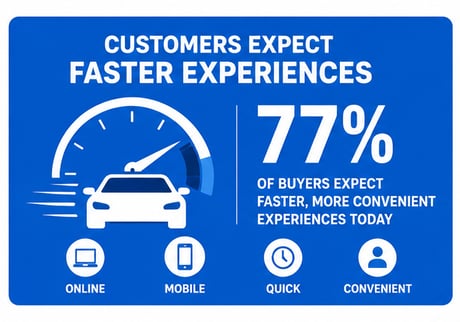
employees do not want to work that way either.
Employees with better tools and fewer roadblocks usually:
- work faster
- feel less frustrated
- help more customers
- and perform better overall
The dealerships adapting to modern customer expectations are usually the ones focused on speed, organization, and efficiency across the entire store.

This Is Bigger Than Lost Keys
This is really about making the dealership run smoother.
It is about helping employees spend less time searching and more time:
- selling cars
- fixing cars
- helping customers
- and moving inventory
The dealerships that are really good operationally usually figure this out early.
They realize the goal is not just reducing lost keys.
The goal is removing unnecessary slowdowns from the entire store.
Because when employees stop wasting time searching for keys and vehicles:
- customers wait less
- departments move faster
- employees get less frustrated
- and the dealership simply operates better
That is why more dealerships are starting to invest in better visibility tools and processes across sales, service, recon, and inventory management.
Because at the end of the day…
the key usually is not lost.
We just cannot find it when we actually need it.
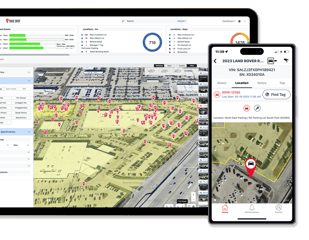
 See How Dealerships Track Keys & Vehicles