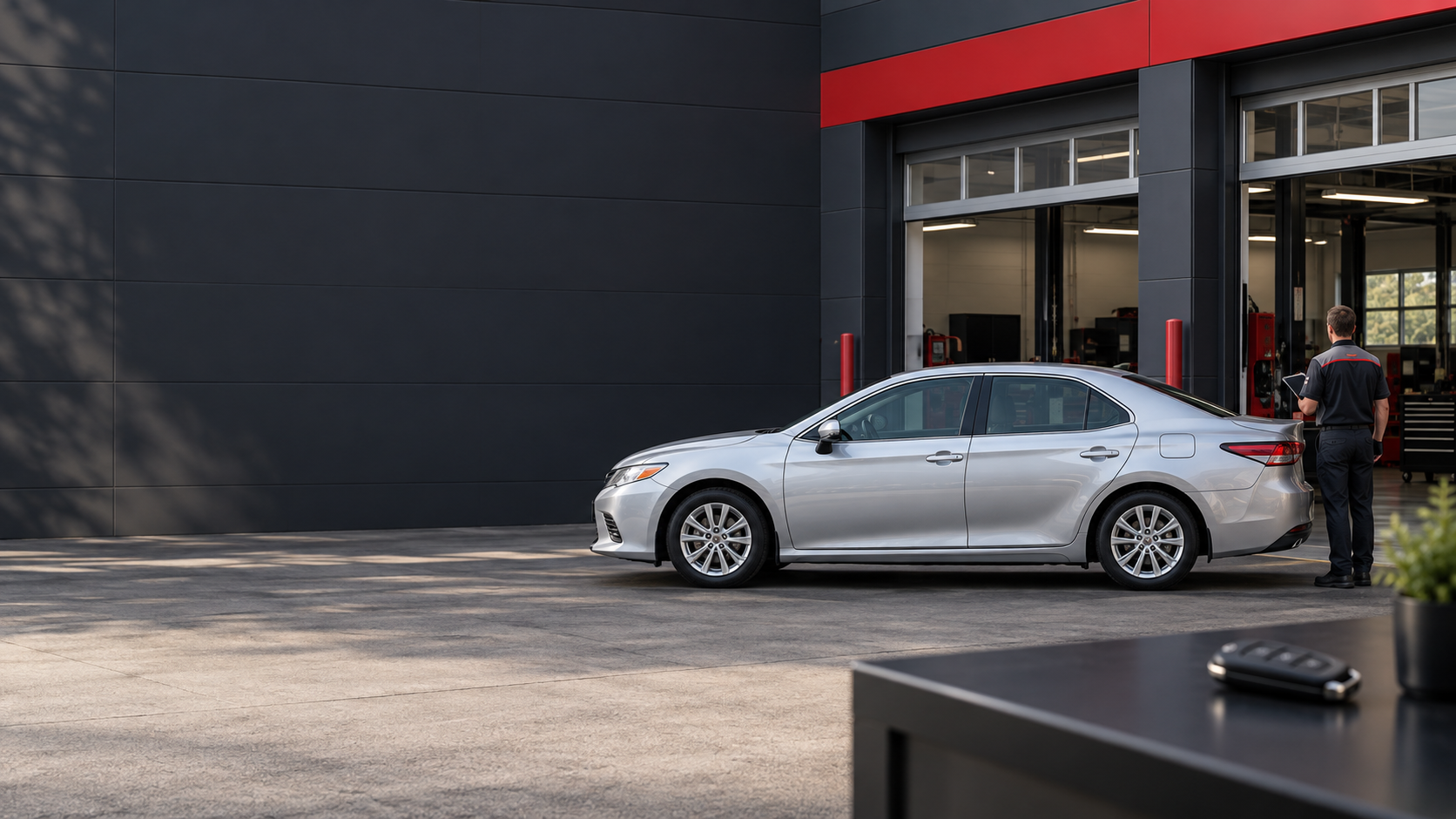
.png?width=1693&height=929&name=Generated%20image%201%20(3).png)
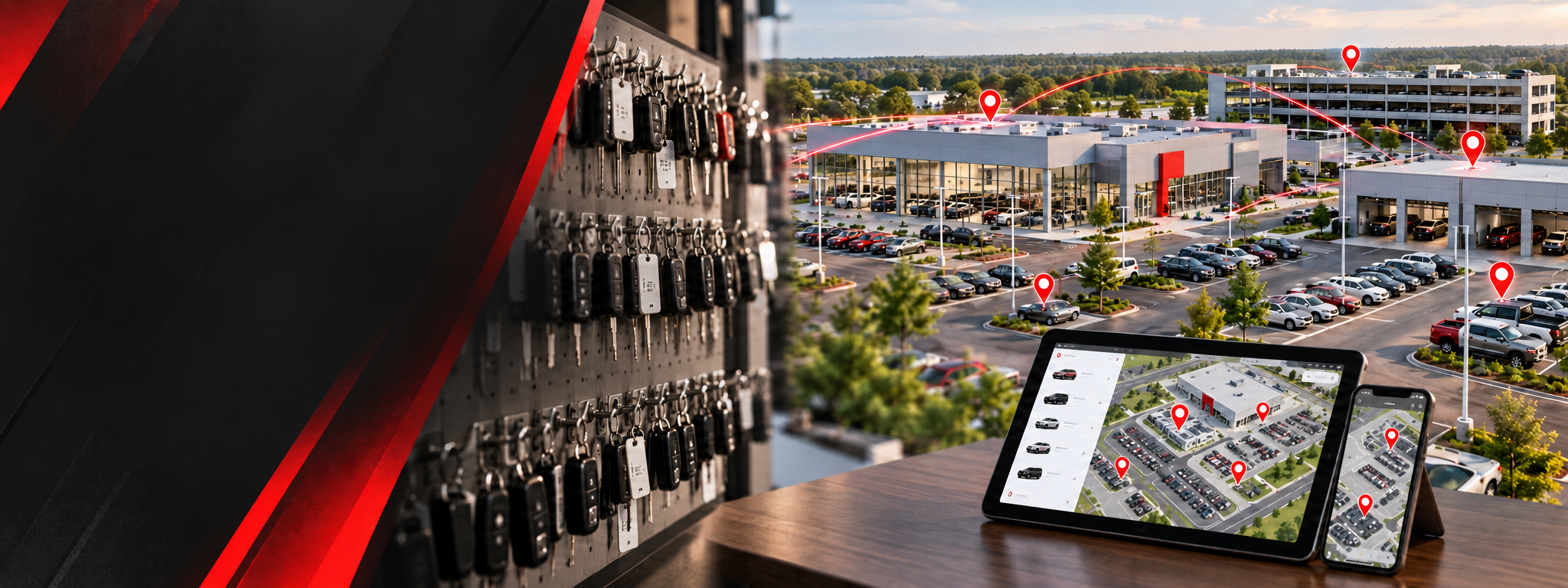
Dealerships track vehicles across multiple lots and parking garages by using real-time vehicle location systems, lot zones, geofencing, and last-known-location data. This helps employees see whether a vehicle is on the main lot, in a parking garage, in service, at recon, in detail, at overflow parking, or offsite without having to manually search.
Now, let me explain what that actually means without all the tech words.
It means your team should not have to walk the lot, check every level of a parking garage, call three people, check a spreadsheet, and hope someone remembers where the car was parked.
The vehicle is usually not lost.
It is usually sitting somewhere on your property, in a parking garage, at another lot, in service, in recon, at detail, or in an overflow area.
The problem is that no one knows exactly where it is when they need it.
Why is it hard for dealerships to track vehicles across multiple lots and parking garages?
Most dealerships do not keep every vehicle in one easy-to-find place.
Vehicles move all day long. A car may start on the front line, move to service, get sent to recon, go to detail, wait for photos, move to an overflow lot, or end up parked on a different level of a parking garage.
That movement is normal.
The issue starts when the location does not get updated or communicated.
A salesperson may think the car is on the front line. Service may have moved it. Recon may be waiting on it. Detail may already be finished with it. A porter may have parked it in overflow. A manager may not know it was moved into the garage.
That is how time gets wasted.
A salesperson starts looking for the car. A porter gets pulled away to help. A manager asks who moved it last. Someone checks the DMS. Someone drives to the overflow lot. Someone walks the parking garage level by level. The customer waits.
And most of the time, the vehicle was there the whole time. The dealership just did not have a fast way to locate it.
Where can vehicles get misplaced at a dealership?
The more places a vehicle can be, the harder it is to manage.
A dealership may have vehicles parked in several different areas, including:
- Main sales lot
- Parking garage
- Overflow lot
- Service parking
- Recon
- Detail
- Photo area
- Body shop
- Storage lot
- Offsite holding lot
- Another dealership in the group
The DMS may show that the vehicle is in inventory, but that does not always tell the team where the vehicle is physically parked right now.
That is the real issue.
Knowing you own the vehicle is not the same as knowing where it is.
Why are parking garages difficult for dealership vehicle tracking?
Parking garages add another layer of confusion.
A vehicle may technically be on the property, but that does not mean it is easy to find. It could be on the first level, second level, roof level, near service, near delivery, or parked in a corner where employees rarely look first.
In a garage, “it’s here somewhere” is not good enough.
If an employee has to walk every level or drive through the garage looking for a stock number, that wastes time. It also creates a worse experience when a customer is waiting for a test drive, delivery, or service pickup.
A good dealership vehicle tracking system should help narrow down where the vehicle was last seen so the team can start in the right area.
How do dealerships usually track vehicle locations today?
Many stores still rely on a mix of manual processes.
That may include:
- Asking around
- Texting employees
- Checking with managers
- Looking at the DMS
- Using spreadsheets
- Walking the lot
- Driving to another lot
- Searching a parking garage level by level
- Remembering who moved it last
Those methods can work when the store is small or when a vehicle does not move very often.
But they break down when vehicles move several times a day.
One person parks it in service. Another moves it to recon. Someone else takes it to detail. Then it gets moved to photos. Later, it ends up in overflow or inside a parking garage.
If no one updates the location, the next person has to start from scratch.
What is the problem with manual vehicle tracking?
Manual tracking depends on people remembering to update the vehicle location every time it moves.
That sounds simple, but in a busy dealership, it is easy for that step to get missed.
Employees are helping customers, moving cars, working repair orders, handling deliveries, checking in inventory, and dealing with whatever problem just came up.
So the vehicle gets moved, but the information does not always move with it.
That creates a familiar dealership problem:
“Who had this car last?”
Or:
“Where did we park that one?”
Or:
“Is it here, in service, in the garage, or at the overflow lot?”
Those questions may seem small, but when they happen every day, they slow the store down.
How does a dealership vehicle tracking system work?
A dealership vehicle tracking system helps the team see where vehicles are without relying only on memory, texts, or manual updates.
Instead of starting with a guess, employees can look up the vehicle and see its current or last-known location.
For stores with multiple lots or parking garages, this can help answer questions like:
- Is the vehicle on the main lot or overflow lot?
- Is it parked in the garage?
- Did it move to service or recon?
- Is it sitting in detail?
- Has it left the property?
- Is it still on a test drive?
- Where should the team start looking?
The goal is not to add more work for employees.
The goal is to reduce the amount of time employees spend searching.
The goal is also not to track employees. The goal is to help the team find vehicles faster and reduce the guessing that slows the store down.
See how dealership vehicle tracking works
In this short video, you can see how dealership vehicle tracking gives the team a faster way to locate vehicles across different areas of the store.
Instead of walking multiple lots, searching parking garages, texting employees, or guessing where the vehicle was parked last, the team can look up the vehicle and start in the right area.
Schedule a demo - Here
That is what most dealerships are missing.
Not more reports.
Not more spreadsheets.
Just a faster way to find the vehicle.
If this looks like a problem your store deals with every day, schedule a demo and we can show how TrueSpot would map your main lot, parking garage, service area, recon, detail, and overflow locations.
Why does multi-lot and parking garage vehicle tracking matter?
Searching for vehicles may not seem like a major problem when it happens once.
But across a busy dealership, those minutes add up fast.
If your team is searching for vehicles every day, that time affects:
- Sales appointments
- Test drives
- Customer wait times
- Service flow
- Recon speed
- Detail coordination
- Employee productivity
- Manager visibility
When employees can find vehicles faster, the store runs smoother.
Salespeople can get customers on test drives faster. Service teams can move vehicles through the process faster. Managers get fewer interruptions. Porters spend less time guessing. Customers spend less time waiting.
Vehicle tracking is not just about lost cars
Most dealerships are not trying to solve a stolen vehicle problem every day.
They are trying to solve a much more common problem:
The vehicle is here somewhere, but no one knows exactly where.
That is the problem that creates daily frustration.
A car sitting in the wrong area can delay a test drive.
A vehicle parked at the wrong lot can slow down delivery.
A unit waiting in recon can be forgotten.
A vehicle parked in the garage can be missed.
A customer can be told to wait while the team searches.
Better visibility helps reduce that friction.
What should dealerships look for in a multi-lot vehicle tracking system?
A good dealership vehicle tracking system should be simple.
The team should be able to find the vehicle quickly without having to learn a complicated process.
For dealerships with multiple lots or parking garages, the system should help show:
- Where the vehicle is
- Where it was last seen
- Whether it is on the main lot
- Whether it moved to another lot
- Whether it is in a parking garage
- Whether it is in service, recon, or detail
- Whether it left the property
- Which area the team should check first
The best system is the one your employees will actually use.
If it creates more work, it will be ignored.
If it helps them find cars faster, it becomes part of the daily workflow.
How TrueSpot helps dealerships track vehicles across multiple lots and parking garages
TrueSpot helps dealerships track vehicles across multiple areas of the store, including the main lot, parking garages, service, recon, detail, overflow lots, and offsite locations.
Instead of depending on memory, texts, spreadsheets, walking the lot, or searching a garage level by level, your team can get a clearer view of where vehicles are and where they were last seen.
With TrueSpot Lot Management 360, dealerships can create better visibility across the areas where vehicles move every day.
The dealership does not need more guessing.
It needs a faster way to find the vehicle.
FAQ: Tracking Vehicles Across Multiple Dealership Lots and Parking Garages
How do dealerships track vehicles across multiple lots?
Dealerships can track vehicles across multiple lots by using a vehicle tracking system that shows each vehicle’s current or last-known location across the main lot, service, recon, detail, overflow parking, parking garages, and offsite locations.
How do dealerships track vehicles in parking garages?
Dealerships can track vehicles in parking garages by using location zones and last-known-location data to help employees narrow down where a vehicle was last seen. This helps the team avoid searching every level manually.
Why is it hard to find vehicles at a dealership?
Vehicles move throughout the day between departments, lots, parking garages, and offsite areas. If the location is not updated or easy to see, employees may have to ask around, walk the lot, search the garage, or drive to another location to find the vehicle.
Can a DMS show where a vehicle is parked?
A DMS can show that a vehicle is in inventory, but it does not always show the vehicle’s exact physical location on the lot.
The DMS tells you the vehicle exists. It does not always tell your team where it is parked.
What is multi-lot vehicle tracking?
Multi-lot vehicle tracking helps a dealership see where vehicles are across multiple dealership locations, including the sales lot, service area, recon, detail, overflow parking, parking garages, and offsite lots.
Does vehicle tracking help with customer wait times?
Yes. When employees can find vehicles faster, customers spend less time waiting for test drives, service updates, deliveries, or vehicle pickup.
Is vehicle tracking only for stolen vehicles?
No. Most dealerships use vehicle tracking to solve everyday visibility problems. The vehicle may not be stolen or truly missing. It may simply be parked in service, recon, detail, overflow, a parking garage, or another lot.
Schedule a demo