The push toward subscription-based features in vehicles isn’t slowing down.
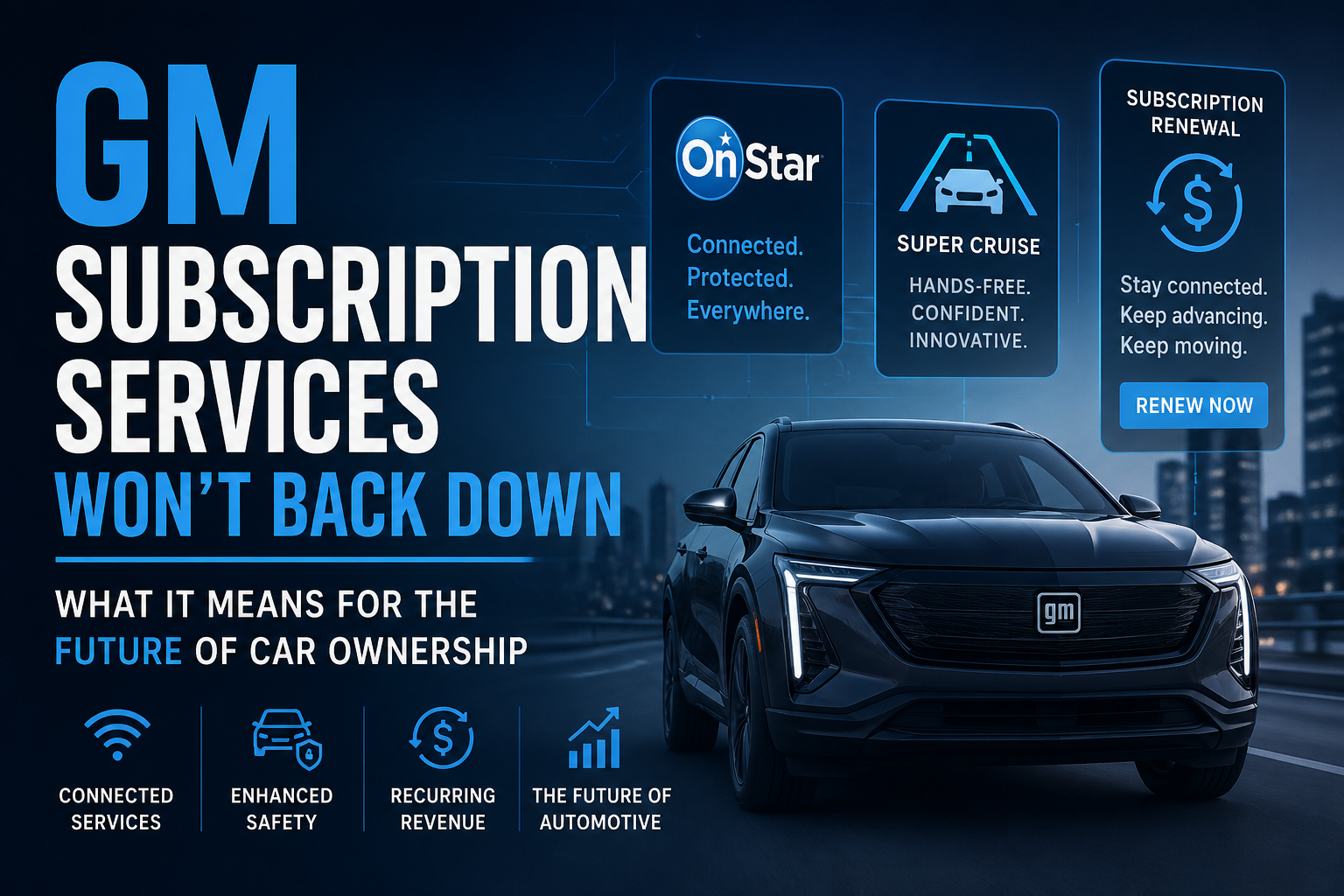
Despite consumer frustration, General Motors is continuing to expand its subscription ecosystem — and the numbers suggest it’s working.
From services like OnStar to advanced driver-assist systems like Super Cruise, GM is building a future where vehicles generate ongoing revenue long after they leave the lot.
And whether drivers like it or not…
This model is here to stay.
Why GM Is Doubling Down on Subscription Revenue
GM’s strategy is simple: shift from one-time vehicle sales to recurring revenue streams.
Key data points:
- Over 13 million active subscribers
- Roughly $2.7 billion in annual subscription revenue
- Subscription margins estimated around 70%
That last number is the key.
Traditional vehicle sales come with:
- High manufacturing costs
- Dealer margins
- Incentives and rebates
Subscription services, on the other hand:
- Require minimal incremental cost
- Scale easily
- Deliver significantly higher profit margins
From a business standpoint, it’s an obvious move.
How the Subscription Model Actually Works
Instead of charging upfront, automakers are increasingly using a “trial-to-paid” model:
- Features are included for free (often for years)
- Drivers become reliant on them
- Then they’re asked to pay to keep access
Examples include:
- Connected services (remote start, diagnostics, emergency response)
- Navigation and infotainment upgrades
- Hands-free driving systems
GM has found that around 30% of customers convert to paid subscriptions after their trial ends.
That’s more than enough to make the model highly profitable.
Why Consumers Push Back — But Still Pay
There’s no shortage of criticism around automotive subscriptions.
Common concerns include:
- Paying for features already built into the vehicle
- Subscription fatigue across multiple services
- Long-term ownership costs increasing
And yet…
Many drivers still renew.
Why?
Because once a feature becomes part of daily use:
- Convenience outweighs principle
- Habits are hard to break
- The perceived loss feels bigger than the cost
This is the same psychology behind:
- Streaming services
- Smartphone apps
- SaaS platforms
The automotive industry is simply catching up.
What This Means for the Future of Car Ownership
This shift changes how we think about owning a vehicle.
1. Cars Are Becoming Software Platforms
Vehicles are no longer static products.
They’re evolving into:
- Connected ecosystems
- Upgradable platforms
- Revenue-generating assets
2. The “True Cost” of a Car Is Changing
The purchase price is no longer the full picture.
Ownership now includes:
- Monthly feature subscriptions
- Service-based upgrades
- Optional add-ons over time
3. Automakers Are Prioritizing Lifetime Value
Instead of focusing only on the initial sale, OEMs are optimizing for:
- Long-term engagement
- Recurring revenue
- Customer retention
That fundamentally reshapes how vehicles are designed, sold, and supported.
Is This the New Normal?
All signs point to yes.
GM isn’t alone — other automakers are exploring similar models across:
- Performance upgrades
- Comfort features
- Connectivity services
While some brands have faced backlash and rolled back certain subscription ideas, the broader trend remains intact.
Because financially, it works.
Final Thoughts
Subscription services in vehicles may not be universally loved…
But they are becoming a core part of the automotive business model.
As technology continues to evolve, expect:
- More features behind paywalls
- More trial-based access
- More emphasis on ongoing customer engagement
The question isn’t whether subscriptions will stick.
It’s how far automakers will take them.